
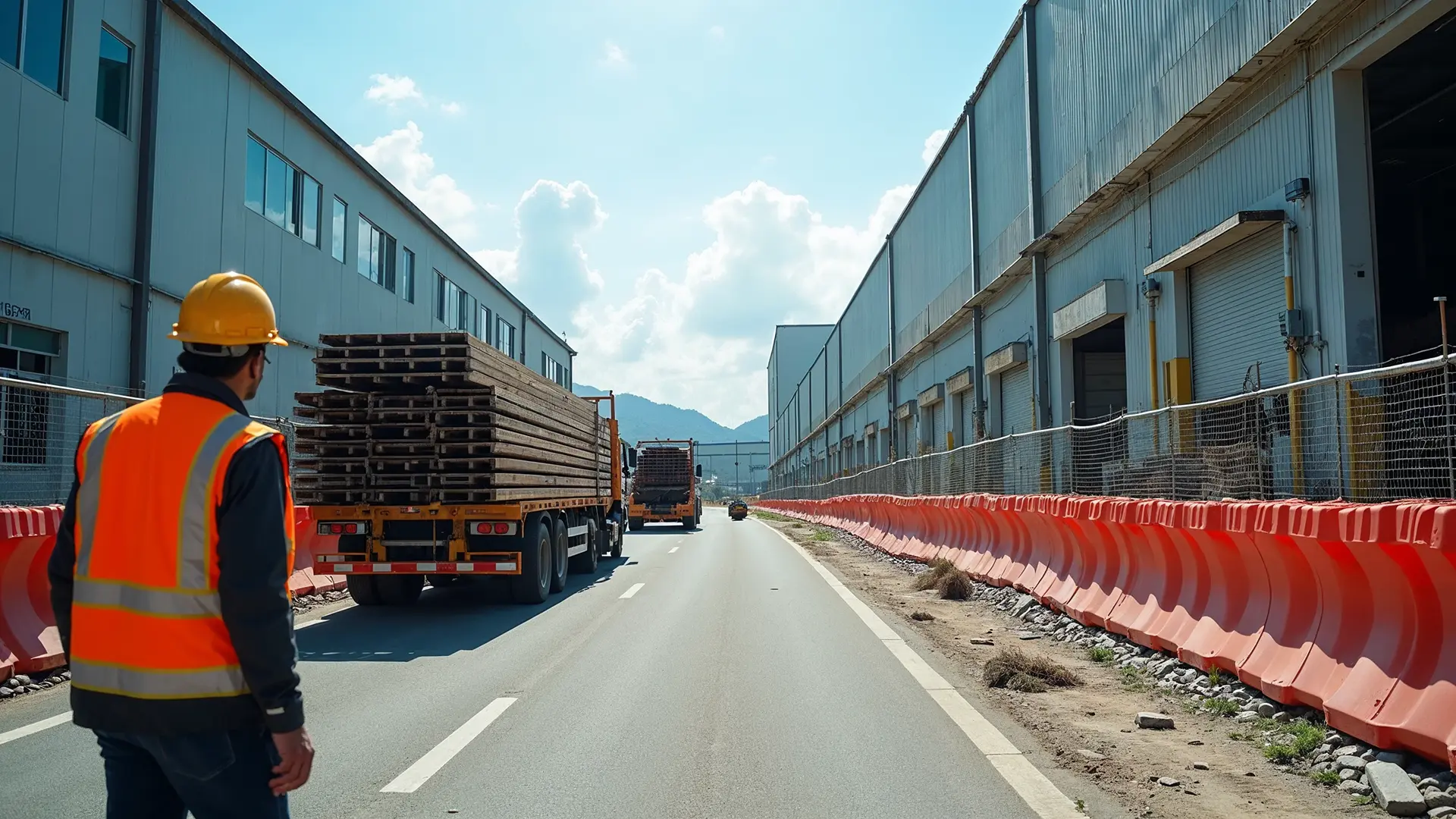
Construction in an operating factory cannot be planned in the same way as work on an empty site.
Production may need to continue. Employees, materials and vehicles still move through the facility. Existing electrical, mechanical and process systems remain in use. Meanwhile, construction teams need sufficient access to complete their work safely.
Construction in an operating factory should be planned around production requirements, existing services, access routes, safety controls and necessary shutdowns. The work is usually divided into controlled phases to keep disruption manageable while construction moves forward.
Understand what must remain operational
Before developing the construction programme, the project team must understand how the factory operates.
This includes production hours, critical machinery, delivery schedules, employee movement, restricted areas and utilities that cannot be interrupted.
These requirements should shape the construction sequence from the beginning. A programme may look efficient on paper but still cause problems if it blocks a loading area, interrupts an essential service or conflicts with production activities.
The question is not only how quickly the work can be completed. It is also what must continue running while the work is carried out.
Verify existing structures and services
Factory extensions and upgrades often need to connect to existing structures, electrical systems, drainage, fire protection, ACMV and process utilities.
Existing drawings provide a useful starting point, but they may not show every modification made to the facility over time. Site conditions and service routes should therefore be verified before new work is finalised.
An unidentified service or incorrect assumption can affect more than the construction programme. It may also disrupt the factory operations that depend on it.
Coordinate CSA and MEP works together
In an operating factory, civil, structural and architectural works cannot be planned separately from mechanical, electrical and plumbing systems.
A new wall opening may affect existing service routes. An equipment extension may require additional electrical capacity, ventilation, drainage or process utilities. Structural work may also restrict access for later MEP installation.
These interfaces should be resolved as part of one coordinated construction sequence. The project team needs to establish what must be removed or protected, how new services will connect to existing systems and when each connection can be safely tested.
Early coordination reduces the risk of rerouting services, changing completed work or resolving clashes while production continues nearby.
Divide the work into controlled phases
Opening too many work areas at once can make an operating site difficult to manage.
A phased approach allows specific areas to be isolated, completed and returned to use before work moves into the next zone. Each phase should define:
- The construction area and its boundaries
- Access and delivery routes
- Services that must remain operational
- Services that require isolation
- Dust, noise and vibration controls
- Testing and reopening requirements
The most suitable sequence is not necessarily the fastest for construction alone. It must also account for production, employee movement, emergency access and daily factory operations.
Plan shutdowns, testing and restarts
Not every interruption can be avoided. Certain connections, modifications and testing activities may require equipment or utilities to be temporarily shut down.
These requirements should be identified early. Each shutdown should confirm what will be affected, who must approve it, how long it will take and how the system will be tested before restarting.
Where possible, the work can be scheduled during maintenance periods, weekends or lower-production hours. A contingency plan should also be in place if the work cannot be completed within the intended window.
Reassess safety as conditions change
Conditions inside an operating factory change as construction progresses. Work moves into different areas, access routes are altered and new trades enter the site.
Risk assessment must therefore continue throughout the project. Malaysia’s Department of Occupational Safety and Health emphasises identifying hazards, assessing risks and establishing suitable controls when managing contracted work. DOSH guidance also highlights the importance of coordination between the client and contractor.
The work area should be reassessed whenever the scope, method, access arrangements or surrounding operations change.
Can construction continue while a factory is operating?
Yes. Many construction and upgrading activities can proceed while factory operations continue.
However, this depends on the project scope, existing systems and operational requirements. Some activities may still require temporary isolation or planned shutdowns.
The objective should not be to promise zero disruption before the project is properly assessed. It should be to identify the likely effects early and manage them under controlled conditions.
Planning around ongoing operations
Construction inside an operating factory requires an understanding of how the facility functions and how CSA and MEP works will interact with existing operations.
When these requirements are addressed early, the work can be phased realistically, shutdowns can be controlled and disruption can be managed rather than discovered after construction begins.
At BNQ Engineering, our capabilities across construction, CSA and MEP works allow us to consider these interfaces as part of the wider project.
Planning an extension or upgrade within an operating facility? Speak to BNQ Engineering about developing an approach around your project and operational requirements.

 We are graded G7 by CIDB.